Mouse SVG, DXF, EPS, JPG, PNG Files for Versatile Use
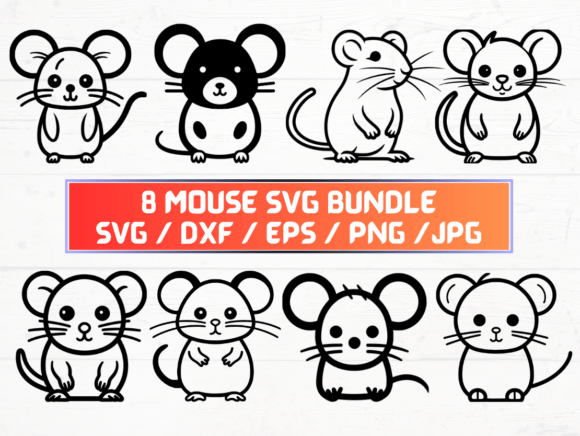
Whether you're designing logos, creating illustrations, or preparing assets for print and digital media, having the right file formats at your disposal can make all the difference. The Mouse SVG, DXF, EPS, JPG, and PNG files included in this product offer a comprehensive set of tools to meet diverse creative and professional needs. With 8 files in each format, you get flexibility and precision, all delivered instantly via ZIP download.
This digital product includes SVG, DXF, EPS, JPG, and PNG versions of a mouse graphic, ideal for use in a wide range of applications—from web design to industrial printing. Each file is crafted with attention to detail, ensuring high quality and compatibility across platforms and software.
Understanding File Formats and Their Uses
SVG (Scalable Vector Graphics) files are perfect for digital projects that require scalability without loss of quality. Whether you're designing a website, mobile app, or social media post, SVG files maintain sharpness at any size. This makes them especially useful for icons, logos, and illustrations that need to be responsive on different screen sizes.
DXF (Drawing Exchange Format) is widely used in engineering, architecture, and CAD software. If you're working on technical drawings, blueprints, or laser cutting projects, DXF files ensure precise representation of shapes and dimensions. These files are compatible with most design and manufacturing software, making them a go-to choice for professionals in those fields.
EPS (Encapsulated PostScript) is another vector format, often preferred for high-resolution printing. It's commonly used in publishing, signage, and packaging design due to its ability to maintain clarity even when scaled up. EPS files are also compatible with many illustration and design programs, offering versatility in both digital and print workflows.
JPG (Joint Photographic Experts Group) files are best suited for photographs and complex images with gradients and color variations. They compress well, making them efficient for web use and online sharing. However, they do not support transparency, so they may not be ideal for layered designs or overlays.
PNG (Portable Network Graphics) files are similar to JPG but support transparency, making them ideal for graphics that need to be placed over different backgrounds. The transparent background feature is particularly useful for icons, buttons, and other UI elements where the background might change frequently.
Who Can Benefit from These Files?
Creative professionals, such as graphic designers, illustrators, and web developers, will find these files invaluable. The availability of multiple formats allows them to choose the one that best fits their project’s requirements, whether it's for print, digital display, or technical applications.
Entrepreneurs and small business owners looking to build a brand identity can use these files to create consistent visual elements across various marketing channels. From website banners to social media posts, the versatility of these files ensures that branding remains cohesive and professional.
Freelancers and content creators who produce digital assets for clients will appreciate the convenience of having ready-to-use files. The instant download feature means no waiting—just access to high-quality, editable files that can be customized quickly to fit specific needs.
Educators and publishers can also benefit from these files by incorporating them into educational materials, presentations, or printed resources. The transparent PNG files, for example, can be easily layered onto different backgrounds to suit various teaching or publishing contexts.
Practical Applications and Use Cases
The Mouse SVG, DXF, EPS, JPG, and PNG files can be used in numerous practical scenarios. For instance, a web developer might use the SVG version for an interactive icon on a website, while a printer might use the EPS file for high-quality signage. A hobbyist crafting DIY projects could utilize the DXF file for laser-cutting a custom design.
If you're designing a presentation, the PNG files with transparent backgrounds can be seamlessly integrated into slides, allowing for clean and professional visuals. Similarly, marketers might use the JPG files for promotional materials, knowing they’ll look great on both digital and printed media.
One of the greatest advantages of this product is the inclusion of multiple formats. This eliminates the need to convert files between different programs, saving time and reducing the risk of quality loss during conversion. You can work directly with the file type that suits your workflow, ensuring efficiency and consistency throughout your projects.
Considerations and Limitations
While these files offer a wide range of benefits, it's important to consider the specific needs of your project. For example, if you're working on a design that requires animation or interactivity, SVG might be the best option. However, if you're focusing on print media, EPS or high-resolution JPG files would be more appropriate.
Additionally, keep in mind that some file formats may have limitations. For instance, JPG does not support transparency, so it’s not suitable for designs that need to be overlaid on different backgrounds. In such cases, PNG would be a better choice.
It's also worth noting that these files are digital products and will not be shipped physically. Once purchased, you'll receive immediate access to the ZIP folder containing all the files, which you can download and use as needed. This makes the product highly convenient for users who need quick access to their assets.
Overall, the Mouse SVG, DXF, EPS, JPG, and PNG files provide a versatile and valuable resource for anyone involved in design, publishing, or digital content creation. By understanding the strengths of each format and how they can be applied in real-world situations, you can maximize the utility of these files and enhance your creative output.